10 July 2026 · Twitter Ban Service · ~11 min read
Twitter ban tool or shadow ban? Sorting what's real on X
No Twitter ban tool can suspend an X account on command, and no app can shadow-ban someone else; X applies both itself, matching conduct to its written rules rather than counting reports. If you landed here because your own posts stopped getting seen, you are probably looking at visibility filtering, not a ban. This guide separates the two.
Two very different searches hide behind "Twitter ban tool"
The phrase points in two directions, and the useful answer depends on which one you meant. Some people typing it want a lever to get another account removed. Others type it after their own reach collapsed and they suspect they have been quietly throttled. Neither group is looking for the same thing, and conflating them is why the search feels so unsatisfying. The table below draws the line that the rest of this page works from: a real suspension is one outcome, and a shadow ban (X's reach-limiting, or visibility filtering) is a completely different one.
| Suspension / account ban | Shadow ban (visibility filtering) | |
|---|---|---|
| What happens | The account or post is removed; you may be locked out | The post stays up, but its reach is throttled in search, replies and recommendations |
| Who decides | X, after a rule-match review | X's automated systems, under "Freedom of Speech, Not Reach" |
| Are you told | Yes, a notice, usually with an appeal option | Not always obviously; a label sits in your account status |
| Typical trigger | A confirmed X Rules or legal violation | Spam-like behaviour or borderline content |
| Can an outside tool cause it | No | No |
| How it ends | Appeal, or serve out the suspension | Stop the behaviour, appeal the label, wait it out |
Read the rest by whichever half fits you. Worried you have been throttled? Start with the next three sections. Trying to get a rule-breaking account actioned? Skip to what really moves a reviewer.
What is a shadow ban on X, and what changed in 2023?
A shadow ban is X quietly limiting how far your posts travel, without deleting them or telling you outright. "Shadow ban" is a user coinage, not X's own word: the company calls it visibility filtering, and it sits inside the enforcement approach it named "Freedom of Speech, Not Reach" in April 2023. Instead of the old binary of leaving a post up or taking it down, X can leave it up while pulling it out of search results, the replies view, notifications and the recommendation feeds. The post exists; almost nobody is shown it. X says the categories that draw reach-limiting are the heavier ones: hateful conduct, abuse and harassment, violent speech, plus content it rates as low quality.
Most of what people call "the shadowban" is actually a handful of separate limits. These four names come from the checker-tool community rather than any X documentation, so treat them as descriptions, not official settings:
- Search suggestion ban: your handle stops appearing in the search autocomplete. The mildest one.
- Search ban: your posts don't surface in search at all, even when someone types the exact text. This is the "classic" shadowban.
- Ghost ban (thread deboost): your replies get folded behind the "Show more replies" curtain, so a thread's readers never see them.
- Reply deboost: your replies still appear, but sink to the bottom, under a quality filter.
How do you check whether you've been shadowbanned in 2026?
Start with X itself, not a third-party site. Your account-status and notices page is the only authoritative place a reach limit is recorded, and it will name the label if one is live. Everything after that is corroboration you run yourself:
- Open Settings, then find your account status and any notices. If X has limited the account, the label shows here, and this is your source of truth.
- Search your most recent post's exact text from a logged-out browser or a spare account. If it never appears, that points to a search ban.
- From an account that doesn't follow you, open one of your replies in a busy thread and see whether it hides under "Show more replies."
- Check your own analytics for a sudden impressions drop that timing and content can't explain, then line that up against what steps one to three showed.
Do "Twitter shadow ban tool" checkers actually work?
Less than the marketing suggests, and less than they used to. The reference checker, the open-source shadowban.eu, stopped working and was shut down after X moved to new internal endpoints; its author flagged it as down for good. The successors that still run, a Twitter shadow ban tool hosted on this or that domain, lean on scraping X's front end, and X exposes no official shadowban API, so they break whenever the site changes underneath them and quietly drop tests it has deprecated. A checker can be a useful hint. It is not a verdict, and it is never as reliable as the label on your own account-status page.
How long does a shadow ban last, and how do you get out of one?
There is no published clock, because X doesn't confirm the mechanic by name. Third-party trackers commonly quote anything from roughly 48 hours to about two weeks, with search-suggestion limits clearing quickest and full search or reply deboosts sitting at the longer end. Those figures are estimates the tool community has stitched together, not numbers X stands behind. Getting out is duller than most guides admit: stop whatever tripped the filter (aggressive follow-and-unfollow cycles, near-identical repeat posts, links people report, content that grazes a rule), then appeal through the account-status notice if one is offered, and let the limit expire. There is no button, and no product, that lifts it early.
We see the confusion up close. On a case we handled this spring, the owner was convinced a rival had bought a "shadow ban tool" and aimed it at their account. The account-status page told a plainer story: a burst of forty-odd near-duplicate replies inside an hour had tripped X's spam heuristics, the reach limit was temporary, and it cleared on its own inside a fortnight. No outsider had done anything to them.
Why no "ban tool" can suspend someone else's account
Because a suspension is a rule-match decision X makes, nothing you buy can trigger it on demand. The "ban tools" for sale come in two flavours, and both fail. Mass-report bots automate flags against a target; bought "ban panels" resell the same idea with a dashboard. X's systems are built to notice a coordinated burst and discount it, and organising false reports breaches the Misuse of Reporting Features policy, which can get the people filing them actioned instead. We pull the mechanics apart in our look at what a report bot actually runs on your machine, and at why bulk reporting never moves the needle. The one-line version: volume was never the signal, so a tool that only adds volume has nothing to sell you.
So what actually gets an X account suspended?
Named, provable violations do, mapped to a specific line in the rules. The scale only makes sense once you accept that review keys on validity rather than headcount: in the first half of 2024, X suspended around 5.3 million accounts and removed or labelled more than 10.6 million posts, roughly 4.9 million of them under hateful conduct, according to its Global Transparency Report. The following half-year, account suspensions dipped by only about 164,000, so the bar plainly hadn't moved. No system tallying complaints could triage that volume; a rule-based one can. Enforcement also climbs a ladder rather than jumping to a ban: a label, then limited reach, then a temporary lock, and suspension mostly for serious or repeat breaches. If your goal is to get a genuine offender removed, the honest route is narrow and it works: our guide to matching an account to the rule it breaks covers category choice, what reporting an X account really triggers walks the flow, the per-violation routing guide maps each harm to its form, and if you're weighing every option at once, the four ways to take down an account lay them side by side.
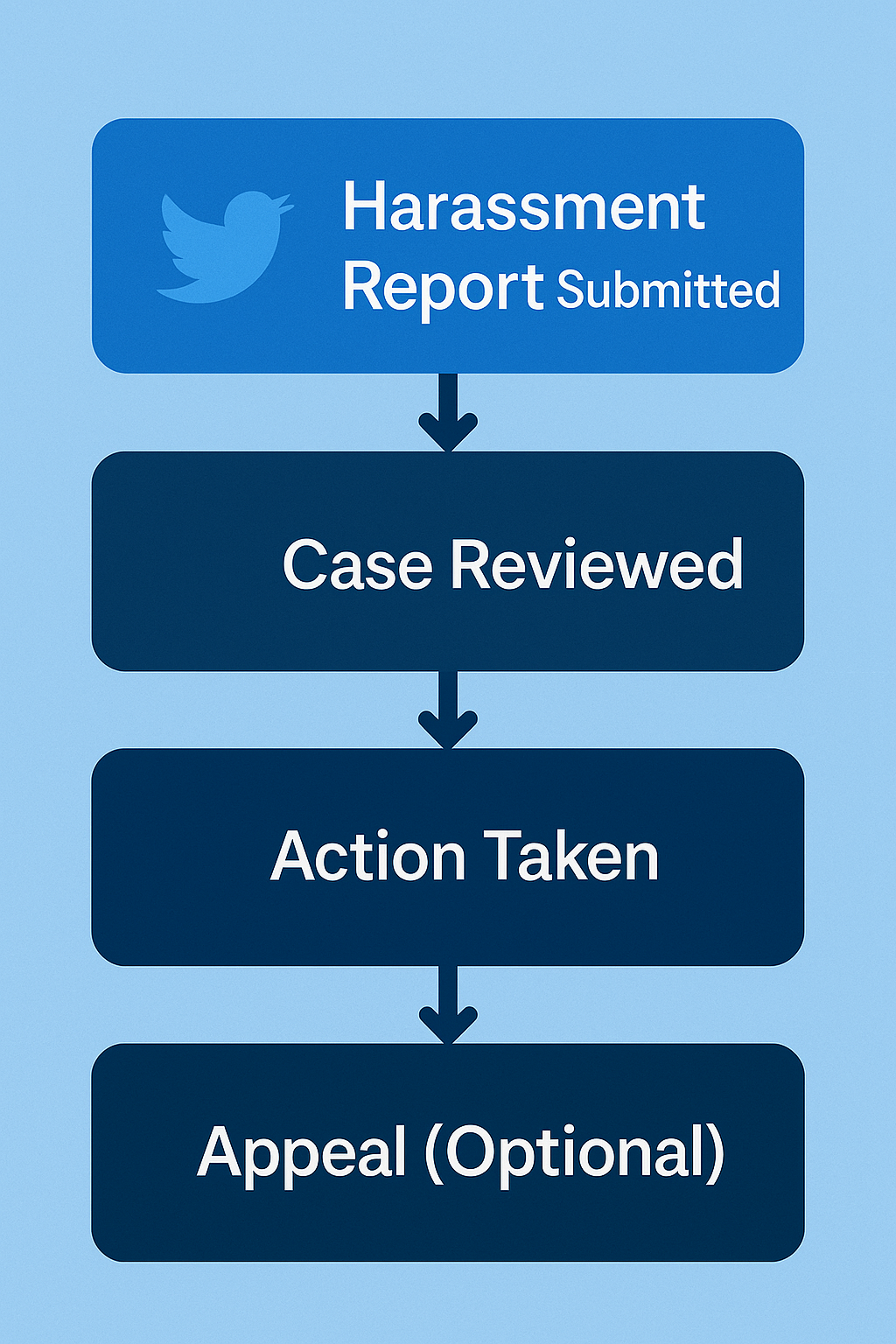
Which report you file matters as much as filing one. A scam belongs on the platform-manipulation route, a fake profile on the impersonation form, stolen work on a copyright notice; pick wrong and a sound case stalls in the general queue. Our map of every official X removal form sorts them, filing an impersonation report covers the copycat case, and if a name you own is being squatted rather than abused, that's the separate track to reclaim an inactive handle. When reports keep coming back closed as "no violation," the category was usually the problem — we cover that failure mode in why X ignores some reports.
When is it worth bringing in a reporting service?
Most reports you can file yourself in a minute, and you should. A service earns its place on the stubborn cases: a scam that keeps relaunching under fresh handles, a ring of coordinated impersonators, a brigading or job-scam campaign hitting one target, or a valid report X wrongly closed that needs a clean escalation. What we actually do is the unglamorous, decisive part: document the breach, pick the exact policy, file impersonation or DMCA paperwork, and track the appeal window; if the fix is one post rather than the whole account, that's the narrower job in our tweet-removal routes. What we won't do is promise a ban, run a mass-report campaign, or move against an account that broke no rule. That boundary is the whole job. If your case is a genuine breach, our independent X reporting service screens each one first; you can see the violation types we take on or tell us the handle and the rule it breaks. For anything involving immediate danger or clearly illegal material, contact the authorities in parallel, because a platform takedown is never a substitute for the police.
Sources
- X: "Freedom of Speech, Not Reach" enforcement philosophy (April 2023)
- X Help Center: when reach is limited (visibility filtering)
- X Help Center: account status and notices
- X Help Center: Misuse of Reporting Features policy
- X Help Center: our range of enforcement options
- X Global Transparency Report (H1 2024 enforcement figures)
- shadowban.eu: open-source checker (project shut down)
FAQ
Is there really no Twitter ban tool that works?
Correct. No third-party tool, bot or paid panel can suspend an X account on demand, because a suspension is a decision X makes after matching a report to a written rule. Products that promise otherwise either do nothing or file coordinated reports that put your own account at risk rather than the target's.
How can I tell a shadow ban from just lower engagement?
Check your account-status page first, because it is the only place X shows an official reach-limit label. Then search your own recent post text from a logged-out browser. A quiet week with no label and normal search visibility is ordinary reach fluctuation, not a shadow ban.
Do free shadow ban checkers like shadowban.eu still work in 2026?
Not reliably. The original shadowban.eu shut down after X changed its internal endpoints, and its author called it down for good. Successor sites still run, but X publishes no official shadowban API, so they scrape the front end and break often. Treat any result as a hint, not a verdict.
How long does a Twitter shadow ban usually last?
X does not publish a figure. Third-party trackers commonly report anywhere from about 48 hours to two weeks depending on the type, with search-suggestion limits clearing fastest. Those numbers are unofficial estimates; the label on your account-status page is the only authoritative signal that a limit has lifted.
Can someone get me shadow banned or suspended by mass reporting?
A pile-on alone should not. X says report volume is not what decides an action; reviewers weigh whether the content breaks a rule. Coordinated false reporting breaches the Misuse of Reporting Features policy and is more likely to get the reporters actioned than the account they targeted.
Does Freedom of Speech, Not Reach mean my post was deleted?
No. Under that April 2023 policy X leaves the post up but limits how far it travels in search, replies and recommendations. Deletion and suspension remove content outright; visibility filtering only throttles it. They are different outcomes with different fixes, which is why telling them apart matters.
Should I pay a service to lift my shadow ban?
No legitimate service can clear a visibility filter faster than fixing the behaviour that triggered it and waiting out the limit. Anyone guaranteeing a shadow-ban removal is selling a result they cannot control. Our work is reporting genuinely rule-breaking accounts through official channels, not restoring reach.